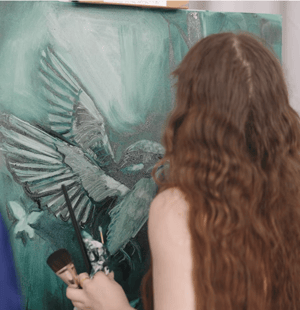
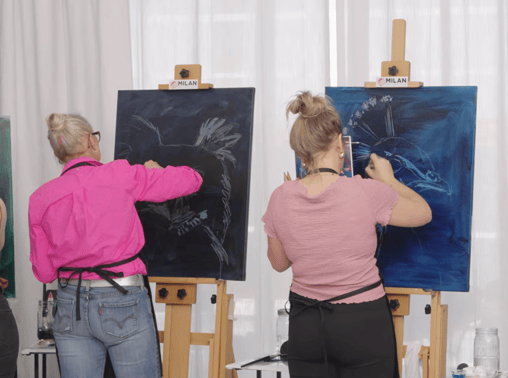
 Many painters are trained to build light first. But classical painters often worked the opposite way. They began with darkness and revealed the light by subtracting paint.
This traditional method is powerful for learning value, form, and structure.
Here is a simple way to try the subtractive oil painting technique yourself.
Join the TOA Viewer Challenge and share your work in the community space → https://bit.ly/4baJFC6
Step 1: Stain the Canvas
Start by toning your canvas with a thin wash of oil paint. Burnt umber or raw umber works beautifully.
Dilute the paint slightly with solvent and cover the entire canvas. This removes the intimidating white surface and immediately gives you a mid-tone to work from.
Let it settle for a few minutes but do not wait for it to dry.
Step 2: Identify the Light
Before touching the brush, take a moment to observe your reference.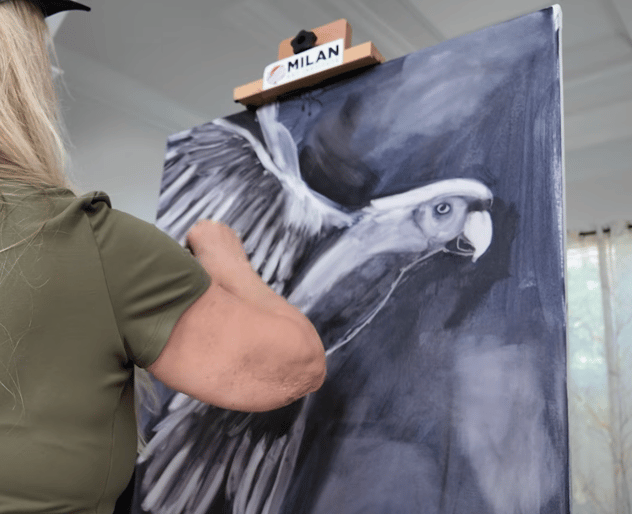
Where is the strongest light hitting the subject?
In subtractive painting, the light areas are created by removing paint, not adding it.
Step 3: Pull Out the Lights
Using a clean brush, rag, or paper towel, begin lifting paint from the canvas.
Gently wipe or brush away the stain where the light hits the form. Think of yourself as carving light out of darkness.
Focus first on the largest shapes. Do not chase details yet.
Step 4: Shape the Form 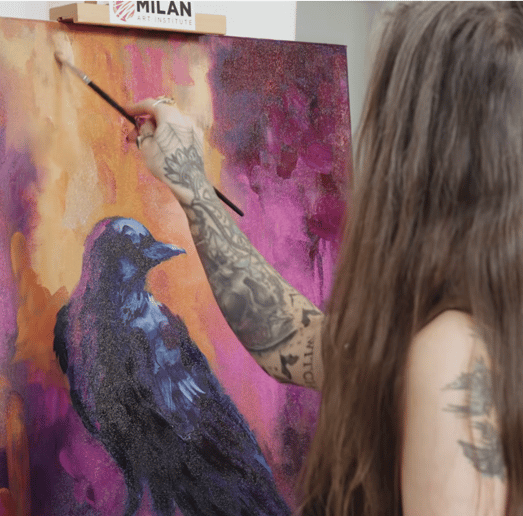
Once the main lights are established, refine the drawing.
Use a brush to adjust edges and strengthen shadows where needed. You can add darker paint back in if areas become too light.
At this stage you are building the structure of the subject using value alone.
Step 5: Let the Underpainting Dry
Allow the underpainting to dry before moving forward.
This layer acts as the foundation of your painting. A strong value structure here will make the rest of the painting much easier.
Step 6: Finish the Painting
Return once the surface is dry and begin adding color, texture, and details.
Because the value pattern is already established, you can focus on refining edges, introducing color temperature, and bringing the subject to life.
Why This Technique Matters
Subtractive painting trains your eye to see light and shadow clearly. It forces you to simplify and commit to strong value relationships early.
Many master painters relied on this approach because it creates structure quickly and keeps the painting grounded in solid fundamentals.
If you want to strengthen your understanding of value, form, and classical techniques, learning methods like this can dramatically accelerate your progress.
Inside the Mastery Program, we guide artists step by step through the same foundational principles used by master painters so you can build confidence and create work with depth, clarity, and impact.