

Line is where art begins. Before color, before texture, before detail—there is line. Every confident drawing, painting, or composition is built on an underlying structure of lines that guide the viewer’s eye and communicate energy, emotion, and intention.
At Milan Art Institute, line is taught not as an outline, but as a living, expressive force.
What Line Really Is
Line is a mark connecting two points, but in art, it is far more than that. Line can suggest motion, describe form, divide space, and evoke mood. It can be bold or delicate, controlled or chaotic, implied or explicit.
Artists use line to:
- Define edges and contours
- Create rhythm and movement
- Lead the viewer through a composition
- Communicate emotion without color or value
Types of Line Artists Use
- Contour line: Describes the outer edges of a form
- Gesture line: Captures movement and energy quickly
- Implied line: Suggested through shape, value, or placement
- Expressive line: Communicates emotion through quality and weight
Master artists vary line weight intentionally, allowing some lines to disappear while others command attention.
Line as an Emotional Tool
Sharp, angular lines often feel aggressive or tense. Soft, curved lines feel calm or organic. Vertical lines suggest strength, while horizontal lines feel grounded and stable. Understanding this visual language allows artists to communicate before a viewer ever recognizes the subject.
Practicing Line with Intention
Try creating studies using only line weight and direction—no shading, no color. This builds clarity and confidence in your mark-making.
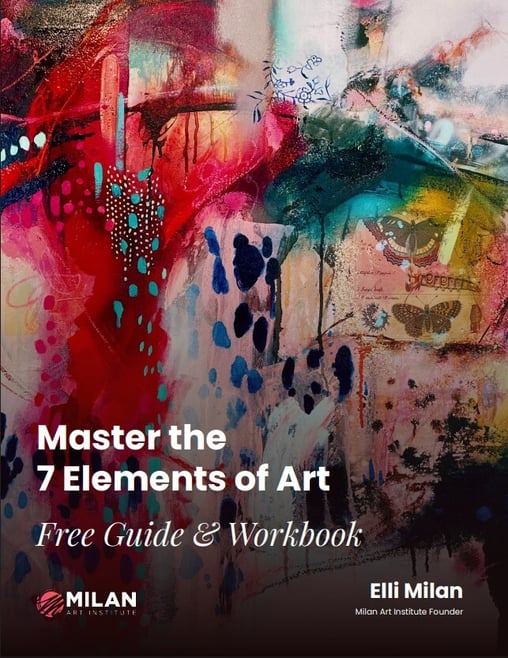
Read more about foundational drawing skills in Master the 7 Elements of Art free guide & workbook.
In this guide, we’ll unpack each of these elements and share how you can intentionally use them to bring depth, contrast, and interest to your work. Get the FREE downloadable guide and workbook HERE.
Final Thought
Mastering the seven elements isn’t just for beginners; it’s how professional artists continually refine their voice and vision. Begin noticing them in your own work, and you’ll start painting with greater clarity and confidence.
👉 Ready to go deeper? Download our free Elements of Art workbook for definitions, exercises, and tips to help you elevate every brushstroke.
🖌️ Want to master composition and create art that captivates?
Join hundreds of artists transforming their creative process through our Mastery Program. From design principles to professional-level critique, this immersive experience will sharpen your skills and elevate your art.