The right tools can absolutely support growth, confidence, and creative freedom. Learning how to use artistic tools effectively allows you to work with intention, refine your skills, and bring your ideas to life more clearly. Whether you are just beginning or deepening an established practice, these tools can become trusted partners in your creative process.
Proportional Tools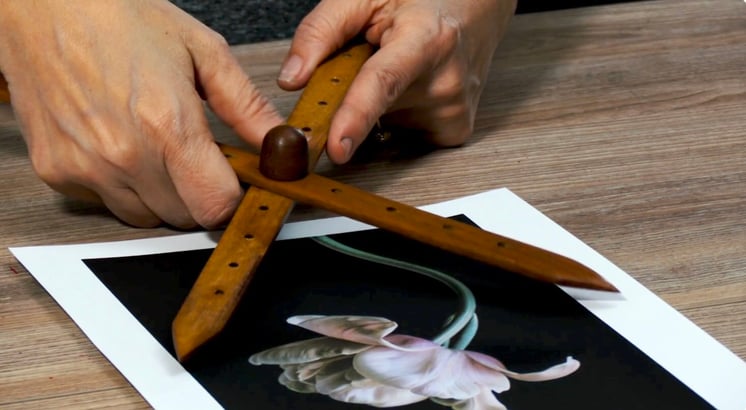
Understanding proportion is foundational to strong drawing and painting. Proportional tools such as dividers, proportional calipers, plumb lines, and simple measuring sticks help artists train their eye and check accuracy. These tools are especially helpful when working from life or reference, allowing you to compare relationships between shapes, angles, and distances. Over time, consistent use strengthens visual judgment so that proportion becomes more intuitive.
Color Wheel
The color wheel is one of the most powerful learning tools an artist can use. It teaches the relationships between primary, secondary, and tertiary colors, as well as concepts like complementary colors, color harmony, and temperature. Whether you are mixing paint or planning a composition, a color wheel helps you make intentional choices rather than guessing. With practice, it becomes a guide for creating mood, contrast, and balance in your work.
Brushes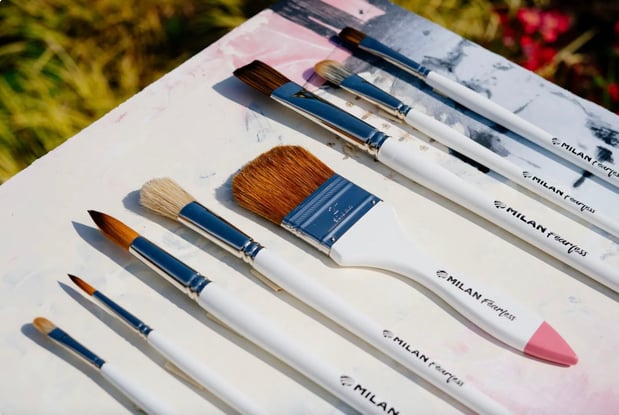
Brushes are an extension of the artist’s hand. Different shapes, sizes, and materials allow for a wide range of marks and textures. Flat brushes can create bold strokes and sharp edges, rounds offer versatility, filberts blend softness and control, and detail brushes bring precision. Learning how each brush responds to pressure, paint load, and surface helps you communicate more clearly through your marks.
Mediums
Mediums change how paint behaves and open up new creative possibilities. In oil painting, mediums can increase flow, transparency, or drying time. Acrylic mediums can add texture, gloss, or matte finishes. Watercolor mediums can affect granulation and lift. Understanding mediums allows you to work more intentionally, build layers with confidence, and experiment safely without compromising your materials.
Palette and Mixing Tools
A palette is more than a surface for holding paint. It is a space for problem-solving and discovery. Palette knives, mixing spatulas, and even simple rags play an important role in color mixing and paint application. Palette knives can be used not only for mixing but also for expressive painting, adding texture and energy to a surface.
Drawing Tools
Pencils, charcoal, conte, ink, and erasers each offer unique qualities. Hard pencils support precise construction, while soft graphite and charcoal allow for expressive value and gesture. Kneaded erasers lift highlights gently, while firm erasers create sharp corrections. Exploring a variety of drawing tools helps you find the marks that best match your artistic voice.
Extracting and Transfer Tools
Extracting tools such as viewfinders, grids, tracing paper, and transfer paper help artists isolate compositions and move ideas from one surface to another. These tools are especially useful when scaling drawings, planning complex compositions, or working through multiple studies. They support efficiency while still honoring the artist’s hand and decision making.
Easels
An easel supports both your artwork and your body. Working vertically improves perspective accuracy and helps you see relationships more clearly. Easels come in many forms, including studio easels, field easels, and table easels. Choosing one that fits your space and working style can greatly improve comfort and focus during longer sessions.
For artists drawn to painting outdoors, working en plein air offers a unique way to capture light, color, and atmosphere directly from nature. A portable pochade box makes this experience easier and more inspiring because it keeps your palette, brushes, and paints organized and within reach wherever you go. The Explorer Pochade Box from Milan Art Store is built for on-the-go creativity, giving you a compact studio that travels with you from backyard views to distant landscapes. With a universal tripod mount and adjustable lid, it turns your plein air setup into a stable, versatile easel that supports your vision in the field and inspires fresh, spontaneous work.
Surfaces and Grounds
Paper, canvas, panels, and prepared surfaces all affect how a medium behaves. Gesso and grounds allow you to control absorbency and texture, creating a surface that supports your technique and vision. Experimenting with different surfaces can lead to new discoveries and unexpected inspiration.
Lighting Tools
Good lighting is essential for seeing color, value, and form accurately. Natural light, daylight bulbs, and adjustable lamps help reduce distortion and eye strain. Consistent lighting allows you to make confident decisions and see your work clearly at every stage.
Last Thoughts
We encourage artists to view tools as teachers. Each one offers an opportunity to learn, refine, and expand your creative language. Mastery does not come from owning every tool, but from understanding how and why you use the ones that serve your vision. When tools are used with intention, they quietly support the artist while the artwork takes center stage.