
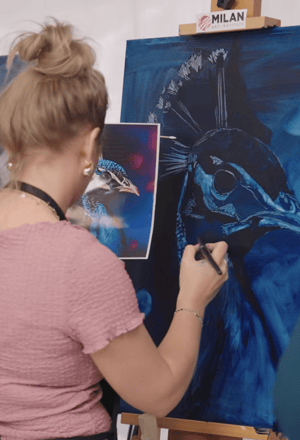
There is a moment before every great painting begins.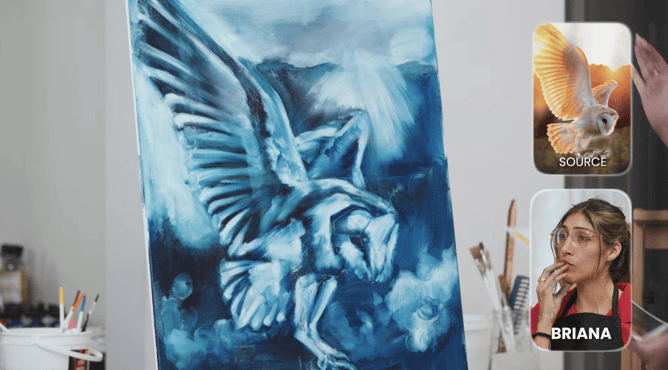
It’s quiet.
No brush has touched the surface.
No color has been mixed.
And yet — the outcome is already being shaped.
That moment is when you choose your reference.
In Episode 1 of The Outstanding Artist – Season 3, we saw something powerful: the artists who thrived didn’t just paint well; they chose wisely. Their success began before the first stroke.
Because the truth is this:
Your painting can only rise to the level of the reference you choose.
If you want mastery, it starts here.
Why Your Reference Matters More Than You Think
Many artists believe skill alone determines the result. But even advanced painters struggle when working from weak source material.
A poor reference forces you to:
- Guess at values
- Invent structure
- Compensate for bad lighting
- Fight cluttered composition
A strong reference supports you.
It clarifies.
It simplifies.
It strengthens your decisions.
Mastery isn’t about working harder; it’s about working intelligently from the beginning.
The 4 Pillars of a Strong Painting Reference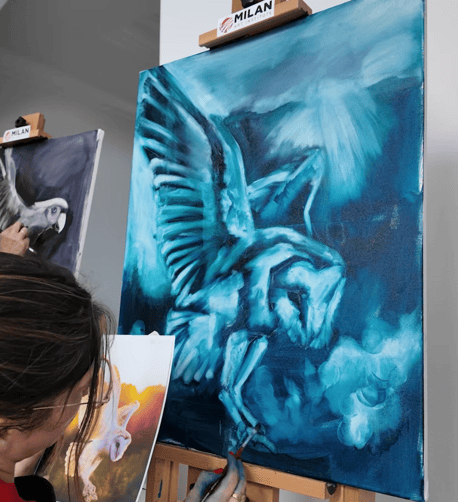
When selecting a source image, train your eye to look for these foundational elements.
1 - Clear Value Structure
Value is the backbone of visual impact.
Before thinking about color, detail, or brushwork, ask yourself:
Can I clearly see the separation between light and shadow?
Try the squint test:
- Do the shapes group into 3–4 clear value masses?
- Is there a readable pattern of light?
- Does the image still make sense when simplified?
If everything falls into mid-tone gray, the painting will lack power, no matter how beautifully you render it.
Strong paintings begin with strong value design.
2 - Strong, Directional Light
Light is what gives form, dimension, and emotion.
Look for:
- One dominant light source
- Clear shadow shapes
- Defined highlights
- Noticeable contrast
Avoid references with flat, even lighting. Without contrast, there is no drama; and without drama, there is no visual hierarchy.
In competitive settings, the artists who chose dramatic lighting immediately created stronger compositions. Light does half the work for you when chosen well.
3 - Intentional Composition
A powerful painting is not just a copy of a photo, it is a designed experience.
Your reference should support design.
Look for:
- A clear focal area
- Balanced negative space
- Strong silhouette shapes
- Cropping that eliminates distractions - avoid tangent edges
Avoid busy backgrounds and unnecessary detail. Complexity without structure creates confusion.
The master artist simplifies first and builds complexity later.
4 - A Clear Focal Point 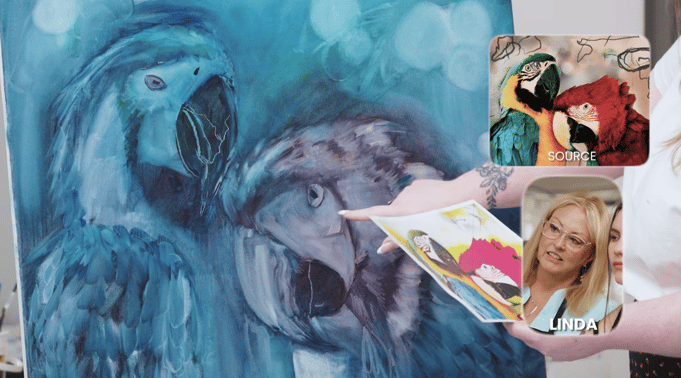
Ask yourself one essential question:
What is this painting about?
If you cannot answer in one sentence, the image may lack clarity.
Strong references have:
- One dominant subject
- Supporting elements that enhance, not compete
- A clear visual hierarchy
When time is limited — like in Episode 1 — clarity wins over ambition.
Common Mistakes Artists Make
Even talented artists fall into these traps:
-
Choosing Sentimental Images
Emotional attachment does not equal strong structure.
-
Choosing Overly Detailed Photos
Too much information slows your process and encourages overworking.
-
Choosing Low-Quality Images
Blurry or poorly lit photos force guesswork and guesswork weakens confidence.
-
Ignoring Value Contrast
Beautiful color cannot compensate for weak value design.
A Simple Pre-Painting Checklist
Before committing to a reference, pause and ask:
- Can I clearly identify light and shadow?
- Is there one dominant light source?
- Does the composition feel intentional?
- Is the focal point obvious?
- Can I simplify this into 3–5 major shapes?
If most answers are “no,” keep looking.
This single decision can save you hours and elevate your final result dramatically.
Start Strong to Finish Strong
If you want to grow as an artist, stop thinking of reference selection as a minor step.
It is a foundational discipline.
When you train your eye to:
- See value clearly
- Recognize strong light
- Design through cropping
- Simplify into powerful shapes
You stop hoping your painting will work.
You know it will.
Ready to Build True Artistic Mastery?
Learning how to choose a strong painting reference is just one piece of a much larger transformation.
Inside the Mastery Program, artists don’t just learn techniques; they train their eye, deepen their understanding of fundamentals, and develop the confidence to create powerful, intentional work from start to finish.
If you're ready to:
- Strengthen your foundations
- Paint with clarity and purpose
- Build real, repeatable skill
- And elevate your work to a professional level
Then the next step is clear.
👉 Explore the Mastery Program and begin your journey toward artistic mastery.
Because outstanding art doesn’t happen by accident.
It’s built — one intentional decision at a time. 🎨