
Every artist knows this moment.
You step back from your painting and suddenly it looks terrible. The colors feel off. The drawing feels awkward. The whole painting looks muddy, stiff, or unfinished.
This moment has a name: the ugly stage.
And here is the important thing to remember. Almost every strong painting passes through it.
The ugly stage is not failure. It is the messy middle where the structure of the painting is still being worked out. The artists who grow the most are the ones who learn how to move through this stage instead of giving up on the painting.
If you have a painting that feels like it is falling apart, here are practical ways to bring it back on track.
1 - Step Back and Reset Your Eyes
Before you start fixing anything, step back from the painting.
Look at it from across the room. Squint. Take a photo of it on your phone. You want to see the painting as a whole instead of getting lost in the details.
Ask yourself a few simple questions.
-
Does the value structure still make sense?
-
Is the focal point clear?
-
Does the lighting feel consistent?
Sometimes a painting only feels ugly because you have been staring at it too closely for too long.
2 - Go Back to Your Source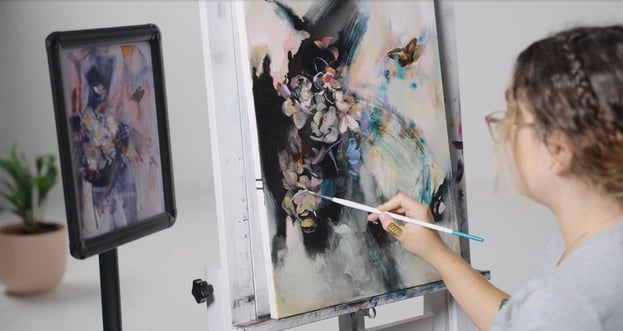
One of the most powerful things you can do during the ugly stage is go back to your source.
Look again at your reference image, still life, or subject. Compare it to what you have painted.
Ask yourself:
- What are the biggest shapes in the reference?
- Where are the darkest darks and lightest lights?
- What is the clearest edge or focal area?
Often, the painting starts to fall apart when we drift too far from the original visual information. Returning to your source helps you reconnect with the truth of the subject.
It grounds the painting again.
See what the contestants on The Outstanding Artist E4 Season 4 do to bring their paintings to the next level...
3 - Rebuild the Value Structure
Values are the backbone of your painting.
When things begin to feel messy, simplify your values again. Squint at your painting until you only see two main groups: lights and darks.
Strengthen those value relationships. Clarify the separation between the light family and the shadow family. Once the values are clear, the painting immediately becomes more readable.
Strong paintings are built on strong value structure.
4 - Simplify the Shapes
Another common cause of the ugly stage is adding details too early.
When too many small shapes appear, the painting loses its design.
Return to the large shapes and masses. Soften areas that have become overly busy. Reinforce the main silhouette of your subject and make sure the composition reads clearly from across the room.
Great paintings are built on clear, confident shapes.
5 - Adjust Your Edges 
Edges can quickly make a painting feel chaotic if everything is sharp.
Look for places where edges can soften and merge. This helps guide the viewer's eye and creates depth.
A helpful guideline is:
- Sharper edges near the focal point
-
Softer edges as forms move away from it
This simple adjustment can bring calm and structure back to the painting.
6 - Bring Back Color Harmony
Sometimes the ugly stage appears because the colors have started to compete with each other.
You can restore harmony by gently adjusting the color relationships. This might mean toning down an overly bright area or subtly glazing a color across a section to unify it.
Think of the painting like an orchestra. All the colors should feel like they belong to the same musical piece.
7 - Trust the Process
The ugly stage is not something that only beginners experience. Professional artists encounter it all the time.
The difference is that experienced painters recognize it quickly and know how to work through it.
They step back. They go back to the source. They simplify values and shapes. They adjust edges and color harmony.
And gradually, the painting begins to resolve.
What feels like a disaster today may simply be the middle step toward something beautiful.
Keep Growing as an Artist
Learning how to diagnose and repair a struggling painting is one of the most valuable skills an artist can develop. When you understand composition, values, color harmony, and edges, you gain the confidence to work through challenges instead of abandoning the canvas.
If you want deeper guidance and a clear system for building powerful paintings from start to finish, explore the Mastery Program. Inside the program, you will learn the core principles that help artists move past the ugly stage and create work they are proud of.
Your next breakthrough painting might already be sitting on your easel. It just needs a few thoughtful adjustments.