
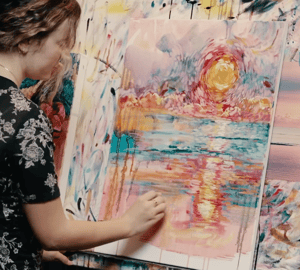
Impressionism: Painting Life as It Feels in the Moment
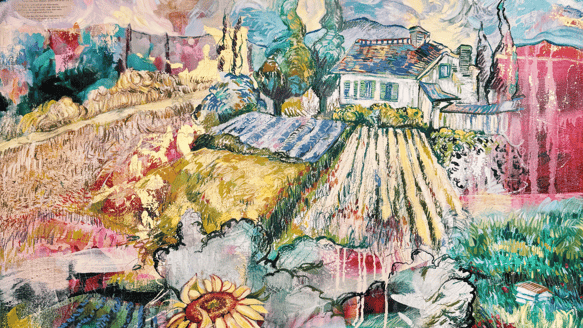
Impressionism isn't about perfection; it's about capturing the fleeting beauty of a moment. Rather than aiming for precise details, artists in this movement embraced spontaneity and light. Their quick, visible brush strokes convey an immediate “impression” of what they saw, bringing to life the waylight, shadow, and color shift with time. Kiama Art Gallery, Wikipedia
The heart of Impressionism lies in its love for the ephemeral. These artists weren't confined by rigid rules. They stepped outdoors, practicing pleinair painting, to capture real-life scenes in natural light. Whether it’s the shimmer of sunlight on water or the way shadows stretch at sunset, Impressionist paintings pull us into those moments, offering a sensory experience that feels vibrant and alive. Art in Context
Download the FREE workbook for full technique → https://bit.ly/45IO39A
What Makes Impressionism Unique?
Impressionism reflects how light interacts with the environment in a particular instant, using color to show movement and mood. Instead of blending paint smoothly, Impressionists placed colors side by side, allowing the viewer’s eye to mix them. This bold technique captures the atmosphere of a fleeting scene, giving paintings a fresh, unfinished look up close but a harmonious whole from afar.
Breaking away from strict academic traditions, these artists value dimensional connection over technical polish. Their work is less about painting with precision and more about conveying how a moment feels. This freedom transformed the art world, inspiring generations of artists to loosen up and experiment with expression over detail. Smarthistory
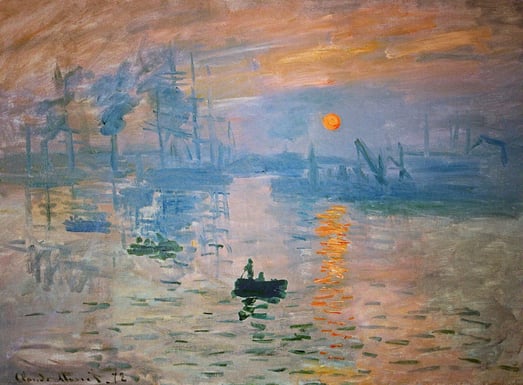
Title: "Impression, Sunrise" Artist: Claude Monet
The Masters of Impressionism: Monet and Renoir
- Claude Monet: Often called the father of Impressionism, Monet captured the ever-changing light on landscapes and water. His work Impression, Sunrise (1872) not only lent its name to the movement but also encapsulates the magic of painting in the moment. Monet’s obsession with light led to his Water Lilies series, where he painted the same pond multiple times to explore how natural elements shift throughout the day.
- Pierre-Auguste Renoir: Renoir's art is brimming with life, celebrating joyful gatherings and leisurely moments. His piece Dance at Le
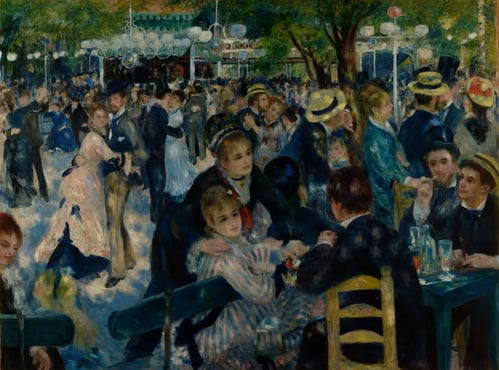 Moulin de la Galette (1876) immerses us in the playful warmth of an outdoor party. Renoir’s soft, colorful brushstrokes convey the flickering light of afternoon sun filtering through trees, making the scene feel immediate and alive. His work reminds us that Impressionism isn't just about landscapes, it’s also about people and the experiences they share
Auguste Renoir’s Dance at Le Moulin de la Galette, Photo Credit artsy.net
The Art of Fleeting Moments
Painting in the Impressionist style requires learning to see light and color in a new way. Instead of getting caught up in details, artists focuson atmosphere and movement. This approach allows the artist to paint swiftly, catching the essence of a moment before it slips away.
Impressionism embraces imperfection. In this style, brushstrokes remain visible, capturing not just what’s seen, but the feeling of being present in the scene. This spontaneity can feel liberating, teaching artists to respond intuitively rather than striving for technical precision. Art in Context
Download the FREE workbook for full technique → https://bit.ly/45IO39A
Why Impressionism Still Inspires Artists Today
The spirit of Impressionism continues to resonate with modern artists. It encourages freedom, spontaneity, and the ability to find beauty in imperfection. In a fast-paced world dominated by polished digital images, Impressionism reminds us to slow down and notice the small moments that make life meaningful.
Today, artists use Impressionist techniques to evoke mood, create atmosphere, or suggest movement. Whether painting bustling cityscapes or quietnature scenes, many still explore how light and color can transform ordinary moments into works of art. The legacy of Impressionism lives on, showing usthat art doesn’t have to be flawless to be powerful, it just has to be honest.
Post-Impressionist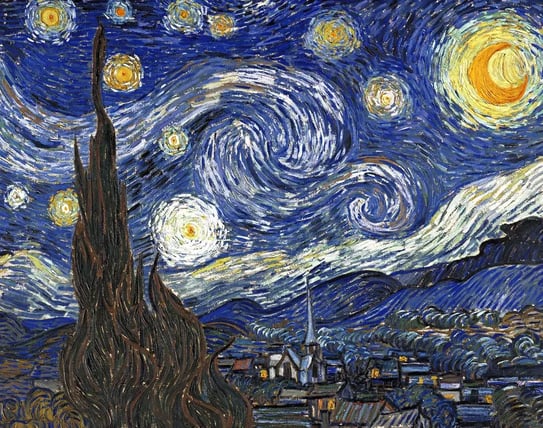
Vincent van Gogh is often discussed alongside the Impressionists, even though his work is more accurately described as Post-Impressionist, building on the movement’s ideas while pushing them further. Like the Impressionists, Van Gogh was fascinated by light, color, and everyday subjects, painting landscapes, cafés, and portraits with visible brushstrokes and vivid hues. However, he used color and texture not just to capture a fleeting moment, but to express emotion and inner experience. In works like Starry Night and Sunflowers, his swirling lines and intense yellows and blues transform observation into feeling, turning nature into something almost alive. Van Gogh’s approach marked a turning point in art history, bridging Impressionism and modern art by showing that painting could be a powerful vehicle for personal expression, not just visual realism.
Vincent van Gogh: The Starry NightThe Starry Night, oil on canvas by Vincent van Gogh, 1889; in the Museum of Modern Art, New York City.
Download the FREE workbook for full technique on how to paint like Van Gogh→ https://bit.ly/45IO39A
Why You Should Explore Impressionism
Trying Impressionism is one of the best ways to loosen up creatively. It teaches you to paint quickly, with confidence, and to trust your instincts rather than overthink your process. Instead of chasing perfection, you’ll learn to focus on the feeling you want to create. This freedom can unlock new levels of creativity, especially for artists looking to break free from rigid technical constraints.
At the Milan Art Institute, we encourage students to embraceImpressionism as a way to develop their unique voice. This style challenges youto observe the world differently, to paint boldly, and to appreciate the beauty in every fleeting moment. Whether you choose to pursue Impressionism long-term or use it to inform other styles, the lessons of spontaneity and light will stay with you throughout your creative journey.
In the end, Impressionism teaches us that art is not just about accuracy, it’s about capturing life as it feels. Each brushstroke whispers: This moment matters. And through this lens, even the most ordinary scenes become extraordinary.
If you want to create art that you love—and that others will love too—the key is developing your skills with intention. To help you become the artist you know you’re meant to be, we’ve designed a one-year immersive journey that will guide you every step of the way. Join the Mastery Program and unlock your full artistic potential.
Why Milan Art Institute?
Your Path to Artistic Mastery Starts Here
At the Milan Art Institute, we blend passion with expertise to help you unlock your artistic potential. Our Mastery Program and online art classes are designed for artists at all levels, providing step-by-step guidance and personalized support from seasoned professionals. Whether you're looking to refine your skills, discover new techniques, or build your artistic career, our courses offer the tools and insights you need. Join our vibrant community and transform your art journey with tailored instruction and a supportive environment.

What Our Students Are Saying