How to Make Great Art Compositions
If your paintings feel flat, confusing, or unfinished, the issue is often not your technique. It is your composition.
Composition is the backbone of your artwork. It is how you guide the viewer’s eye, create emotion, and bring clarity to your message. When composition is strong, even simple paintings feel powerful. When it is weak, even highly detailed work can fall apart.
The good news is that composition is a skill you can learn and apply immediately.
Here is how to start building stronger compositions in your art.
1 - Start With a Clear Focal Point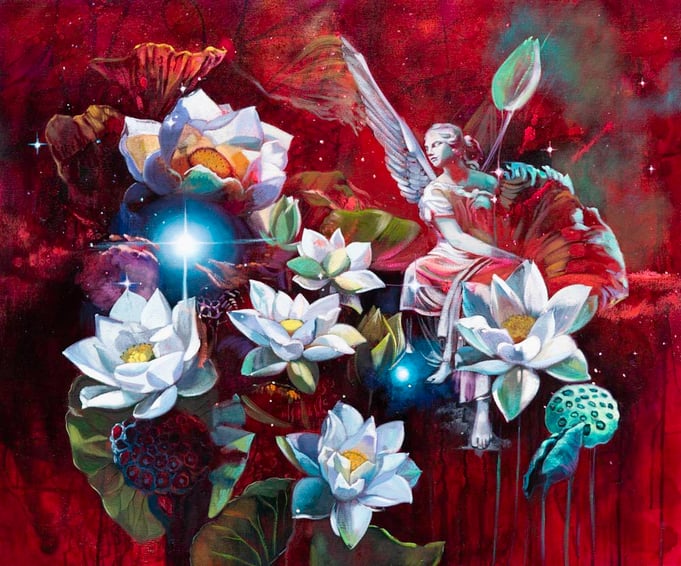
Every great composition begins with a clear intention.
Ask yourself:
What is this painting about?
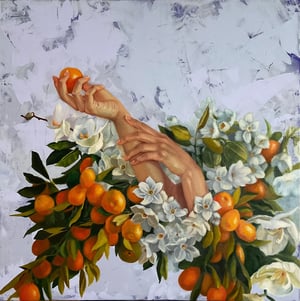
Your focal point is where you want the viewer to look first. Without it, the eye wanders, and the painting loses impact.
To strengthen your focal point:
- Increase contrast in that area
- Sharpen edges selectively
- Add more detail there than anywhere else
- Use color strategically to draw attention
Everything else in your painting should support this main idea, not compete with it.
2 - Simplify Your Shapes
Strong compositions are built on simple, readable shapes.
Before you think about details, squint at your reference or your painting. Can you clearly see the big shapes? If not, simplify.
Focus on:
- Big light and dark masses
- Clear separation between shapes
- Avoiding unnecessary complexity
Great artists are not adding more. They are editing down to what matters most.
See how the contestants on Season 4 of The Outstanding Artist use composition to create compelling work...
3 - Use Value to Create Structure
Value is one of the most powerful tools in composition.
If your values are working, your painting will read clearly even in black and white.
Try this:
- Limit your value range in the background
- Use your highest contrast near the focal point
- Group similar values together to avoid noise
A strong value structure creates instant clarity and depth. Again, squint at your reference or your painting. Can you clearly see the low, mid, and dark tones? If not, adjust.
4 - Create Movement for the Eye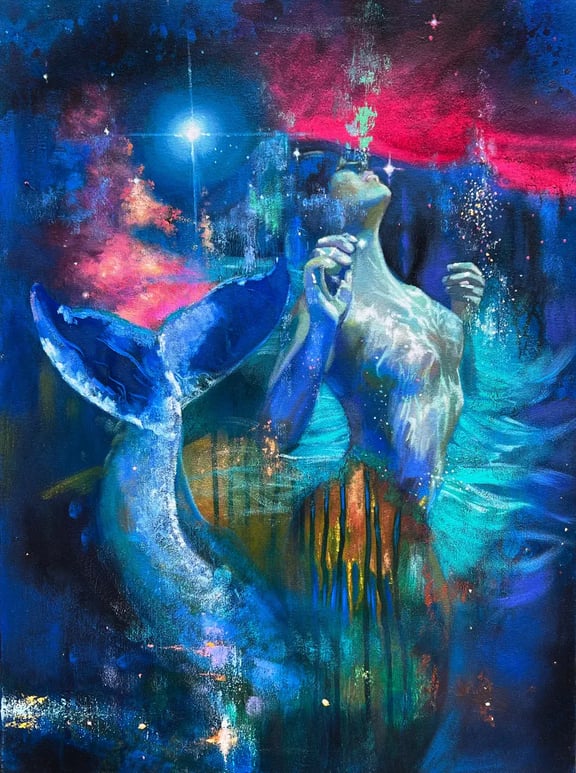
A great composition leads the viewer on a journey.
You can guide the eye by:
- Using lines and edges that point toward your focal point or leads the eye around the painting
- Repeating shapes (in a variety of sizes) or colors throughout the painting
- Creating a visual path that flows naturally
Avoid dead ends where the eye gets stuck or exits the painting too quickly.
5 - Balance Your Composition
Balance does not mean symmetry. It means visual harmony.
You can balance your painting through:
- Distribution of visual weight
- Placement of large and small shapes
- Contrast and color intensity
If one side feels too heavy or distracting, adjust until the whole piece feels unified.
Check out the aftershow to hear more from The Outstanding Artist judges on mastering composition...
6 - Use Resting Space
Not every area needs to be detailed or busy.
Resting space allows the viewer to pause and breathe. It also makes your focal point stand out more.
Think of it like music. Without quiet moments, everything feels overwhelming.
Let some areas stay soft, simple, and less defined.
7- Design Before You Paint
Do not skip this step.
Take time to create a source before starting your final piece. This will help you:
- Test different compositions
- Solve problems early
- Focus on design instead of detail
- Identify your light source
- Experiment with potential backgrounds
Even five minutes of planning can completely transform your final painting. You can try sketching your ideas or using a digital tool to create your sources.
8 - Go Back to Your Source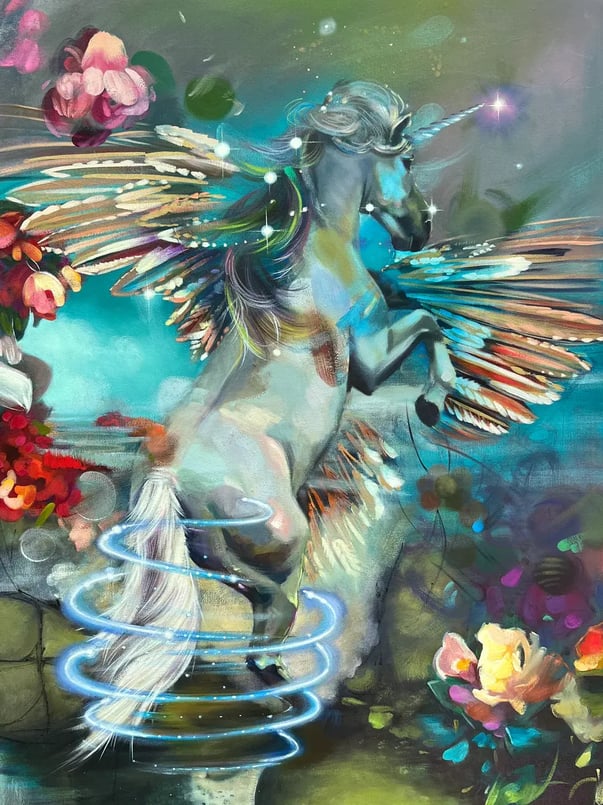
When things start to fall apart, go back to your reference.
Check:
- Are your shapes still accurate?
- Are your values still clear?
- Do you have a clear focal point?
- Did you drift away from your original idea?
- Can you identify your light source?
Strong artists constantly recalibrate. They do not guess their way through a painting.
Final Thoughts
Composition is not about rules you must follow perfectly. It is about making intentional choices that support your vision.
The more you practice simplifying, organizing, and designing your paintings, the more natural it becomes.
And this is where real artistic growth happens.
Ready to Take Your Compositions to the Next Level?
If you want to truly master composition along with color, technique, and creative confidence, you need a structured path.
Inside the Mastery Program, we guide you step by step through the exact process our professional artists use to create powerful, cohesive paintings.
You will learn how to:
- Design strong compositions with confidence
- Eliminate guesswork from your process
- Develop your unique artistic voice
👉 Join the Mastery Program and start creating artwork that feels intentional, expressive, and complete.